3 minuts 21.08.2026
Octagonal nuts – ergonomics and design in one
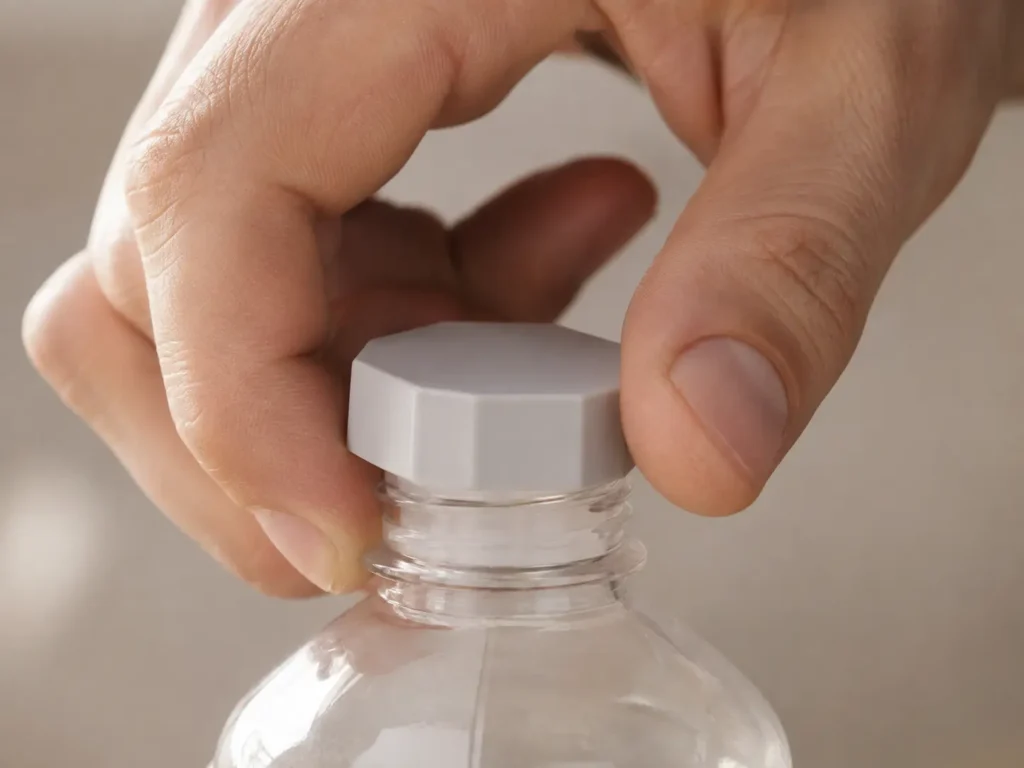
The octagonal cap is a tube closure with an octagonal profile, whose flat walls increase the number of finger contact points during unscrewing. This shape can facilitate turning even when hands are wet or slippery, while also giving the packaging a distinct geometry. In MPACK tubes, the cap is part of the overall specification, so its material, color, and decoration can be matched to the brand’s design. This solution combines practicality with the ability to create a cohesive look across a product line. Discover how octagonal caps can support the ergonomics, safety, and visual identity of your packaging.
What is an octagonal nut?
The octagonal cap is a closure with eight flat sides, designed for use in MPACK tubes. Its geometry distinguishes it from closures with a more rounded profile and provides the fingers with distinct support surfaces when turning.
The octagonal shape serves two purposes: it influences the way the tube is held and creates a distinctive packaging design. The closure becomes a visible part of the product’s identity, not just a technical element. MPACK can tailor it to the tube’s other parameters during the specification stage.
Characteristic octagonal shape
Eight flat walls create tangible support for the fingertips. Compared to a smooth, round profile, the user has more contact points during rotational movements. This same geometry gives the tube an easily recognizable, technical character.
Manufacturing materials – PE and PP
MPACK manufactures caps from PE (polyethylene) and PP (polypropylene). These are two proven material options, and both are recyclable. The best material choice depends on the tube type, dimensions, and planned decoration.
Octagonal nut ergonomics in practice – how does it work?
Ergonomics stems primarily from the surface geometry. Flat sides create several places for the fingers to rest while turning. Therefore, the user doesn’t rely solely on friction against the smooth surface. This is important for products used where hands may be wet or covered with preparations.
The most important mechanisms are simple:
- flat walls provide stable contact points for the fingers;
- tactile edges help control the direction of rotation;
- less risk of slipping, easier to open with wet hands;
- A firmer grip helps you maintain control of the tube when dispensing.
Once unscrewed, the user can hold the tube firmly and press down on its body without unnecessarily repositioning the packaging. This is important for products dispensed in small portions. The cap does not replace a properly sized dispensing opening, but it does impact the operation of the entire tube-closure-product system.
Grip and control when opening and dispensing
Flat sides create predictable pressure points for the fingers. This allows for a more controlled unscrewing motion than with a completely smooth profile. Once opened, it’s easier to maintain a stable grip on the tube during dispensing.
Why the octagonal shape makes it easier to use
The octagon combines flat surfaces with short, tactile edges. Fingers find their footing more quickly, so you don’t have to grip the clasp tightly. This is a result of the element’s geometry, not just a matter of aesthetics.
Expert advises: If the product will be used in a humid environment, evaluate the cap in conjunction with the finished tube and formula. The tube’s diameter, product viscosity, and grip also affect dispensing convenience.
Design and visual personalization – what possibilities do they offer?
The octagonal cap gives the brand an additional element to build the packaging’s character. Its geometric shape can support the minimalist, technical, or premium character of the tube. MPACK allows for color and finish matching to the overall design of the series. This means the closure can be designed in parallel with the body, rather than after the artwork has been approved.
Personalization encompasses color, finish, and decoration techniques. Within a family of several products, color variations can be differentiated while maintaining the same closure geometry. This system helps create consistency within the line without sacrificing the distinction between individual versions.
Colors and finishes – white, transparent, black, PANTONE
Available in white, transparent, and black. Colors can also be selected from the PANTONE palette or matched to a customer-provided sample. This allows the cap to be paired with the body color, logo, or color code of the entire series.
Decoration techniques – screen printing, flexo printing, hot stamping, cold stamping
The MPACK tube design offers screen printing up to 6 colors, flexo printing up to 6 colors, a combination of flexo and screen printing up to 8 colors, and offset printing up to 9 colors. Hot stamping and cold stamping are also available, allowing for the introduction of metallic or contrasting details. These techniques can be combined into a cohesive system, for example, a matte body with a minimalist print and a single, strong decorative accent.
Matte, glossy and soft-touch finishes
Matte reduces reflections and supports the calm, technical nature of the packaging. Gloss reflects light more strongly, while soft-touch creates a surface with a distinctive, soft feel. The finish should support the product’s positioning and other visual identification elements.
Octagonal cap and other types of closures – what are the differences?
MPACK also produces Standard, Softline, and Flip-Top closures. The octagonal cap is one of several design trends that differ in grip, opening method, and visual character.
When making a comparison, it is worth considering the following usage scenario:
- octagonal gives noticeable flat surfaces and a geometric profile;
- The standard has a more classic threaded closure;
- Softline directs the design towards a softer, streamlined shape;
- Flip-Top allows you to open the tube without completely removing the closure.
No variant is objectively better. The Octagonal fits designs that combine a twist-off closure with a strong geometric accent and a distinct grip. The Flip-Top addresses the need for quick opening, while the Standard and Softline may better align with the brand’s more classic language.
Octagonal vs Standard
The standard has a more classic shape, while the octagonal uses eight flat sides as part of the form and grip. You can feel the difference under your fingers when turning it. For the brand, this means the tube can also be distinguished by the geometry of the closure itself.
Octagonal vs Flip–Top and Softline
Flip-Top addresses a different usage scenario, as it opens with a flap without removing the entire closure. Softline has a more streamlined character, while octagonal consciously highlights edges and flat surfaces. Therefore, the cap type should be tailored to the product’s intended use and the brand’s visual language.
Packaging security – how does the first-opening guarantee work?
The cap can be part of the tube’s first-time tamper-evident seal. MPACK provides a membrane or sleeve for this purpose, providing additional security that indicates whether the packaging has been tampered with.
The membrane seals the product before first use and requires physical tearing. The sleeve provides external protection that encloses the packaging element and also provides a visible indication of tampering. Both solutions help the recipient recognize the packaging’s condition. This is important in cosmetic, pharmaceutical, food, and chemical applications.
The type of seal must be determined before production, as it must be compatible with the tube and closure design. MPACK selects the cap type and other parameters in conjunction with the customer during specification preparation.
Application of octagonal nuts – for which industries and products?
Octagonal caps can be used on tubes designed for the cosmetics, pharmaceutical, food, and chemical industries. Each industry may have different opening, dispensing, and product protection methods. Therefore, the closure shape should be evaluated in conjunction with the formulation properties, tube size, and intended use scenario. MPACK selects the configuration as part of the overall packaging design, not as a separate component.
In cosmetics, a geometric closure can enhance product line differentiation, while in pharmaceuticals, a first-open guarantee can also be crucial. Ergonomics and dosing control are often crucial in food and chemical products. Therefore, caps for cosmetic tubes and other applications should combine appearance with real-world conditions of use.
Expert advises: Before confirming your order, test the cap with your target formulation or a sample of similar viscosity. This allows you to assess the grip, dispensing rate, and tube handling in a single test.
How to order octagonal nuts from MPACK?
Ordering a tube with an octagonal cap begins with establishing the project requirements. MPACK analyzes the client’s needs and then, in collaboration with technologists and designers, selects the packaging parameters. At this stage, the product’s size, color, cap type, decoration, and potential first-opening guarantee are determined.
To prepare the specifications, it is worth collecting:
- product type and dosing method;
- assumed capacity and format of the tube;
- expected color of cap and body;
- required decoration and finishing techniques;
- the need to use a membrane or sleeve.
Once the parameters are established, MPACK can present design variants and samples, then proceed to implement the agreed-upon configuration. Production is monitored by automated vision systems, finished tubes undergo quality control testing, and the company is ISO and GMP certified. If you are interested in ordering a tube with an octagonal cap, please specify this type at the beginning of the conversation and contact MPACK or the tube designer.
FAQ – What questions do you have about MPACK octagonal nuts?
The following answers summarize the most important technical and design considerations related to the octagonal cap as a component of MPACK tubes. They can help you prepare a brief and compare available closure types.
1. What is an octagonal nut and how is it different from a standard one?
The octagonal cap has eight flat sides that change the way your fingers contact the closure. The standard cap has a more classic shape and doesn’t utilize such a pronounced geometry as a grip element. The difference, therefore, lies in the ergonomics of turning and the appearance of the tube.
2. What are the practical ergonomic advantages of the octagonal shape?
Flat sides provide a stable base for your fingers when unscrewing. The edges help you feel the movement and reduce reliance on friction against a smooth surface. This can make it easier to use with wet or slippery hands.
3. What materials are octagonal nuts made of?
MPACK manufactures caps from PE and PP. Both materials are recyclable. The closure material should be specified in the overall package specifications.
4. Can the octagonal nut be personalized in color and appearance?
Yes. White, transparent, and black variants are available, and colors can be selected from the PANTONE palette or based on a customer sample. The design can be complemented with finishes and decorations to match your brand identity.
5. What decoration techniques are available for this type of cap?
MPACK tube designs offer screen printing, flexo printing, a combination of flexo and screen printing, offset printing, hot stamping, and cold stamping. Matte, gloss, or soft-touch varnishes are also available. The specific configuration should be based on the graphic design and the desired effect.
6. Is the octagonal nut available with a first-time opening guarantee?
Yes, the closure can be used with either a membrane or sleeve seal. Both solutions allow for the detection of previous packaging tampering. It’s best to request this seal during specification preparation.
7. What packaging and industries are octagonal caps suitable for?
MPACK designs tubes for the cosmetics, pharmaceutical, food, and chemical industries. An octagonal cap can be considered where a twist-off closure, a distinct grip, and a geometric design are important. Compatibility must always be assessed within the entire tube configuration.
8. What is the difference between an octagonal nut and a Flip-Top or Softline?
The Octagonal version utilizes flat walls and edges as a gripping and design element. The Flip-Top opens with a flap without removing the entire cap, while the Softline has a more streamlined design. Each variant addresses a different usage scenario and a distinct brand identity.
9. Are octagonal nuts recyclable?
Yes, because the PE and PP used to produce caps are recyclable materials. The disposal of the entire package also depends on the other components and the local sorting system. The cap itself should not be assigned PCR or sugarcane parameters for the tube body.
10. What is the process of ordering a tube with an octagonal cap at MPACK?
First, you provide your requirements for the product, capacity, appearance, and use. MPACK works with you to determine the tube’s parameters, including cap type, color, decoration, and tamper-evident seal. The design can then be refined through samples and sent to production.